
Skip to main content Accessible Version
Crowns & Bridges
A healthy, beautiful smile starts here

Crowns & Bridges | Dentist
Improve your smile today – call to schedule a consultation!
Claim Now!

Crowns & Bridges

Broken, cracked, or missing teeth can lead to pain, discomfort, and further tooth loss. The team at Lone Oak Dental would love to provide you with a solution such as a crown or bridge. When you first meet us, we will listen to your concerns and desires about your oral health goals as well as the role that finances play in your decisions.

Dental Crowns

A crown or “cap” is a hard protective shell placed on top of the tooth. It prevents a tooth from breaking further and restores the tooth to its original size, shape, and feel. Crowns are often used on a tooth that has had a root canal to protect it. Dental research tells us that any back tooth that has had a root canal needs to have a crown to prevent the tooth from breaking.  The cost for a crown in our office starts at $950.

How the Crown Process Works

Before we fit your tooth for a crown, we will pick the right color to match your smile. We use only the best materials for crowns to ensure that they look right and last a long time.

While you are numb, your tooth will be shaped for the crown and a mold taken of your tooth. This mold is sent to a high quality dental laboratory where your crown is constructed. You will leave our office with a temporary crown, which will protect your tooth between visits to our office.

After 2-3 weeks, the permanent crown will be cemented on your tooth, and you will leave our office with a comfortable, smooth new tooth! We anticipate that your dental crown will last about 15 to 25 years.  

Dental Bridges

A bridge is used to replace one or two missing teeth. Bridges are a single unit that contains an artificial tooth secured to adjacent teeth with crowns.  Bridges to replace one missing tooth start at $2850.

To start the process, we make sure you’re completely numb. Then Dr. Jordan goes to work to prepare adjacent anchor teeth to accommodate your new crowns.

A custom mold is taken of your mouth, and you will leave our office with a temporary bridge that will protect your teeth between visits. The mold taken of your teeth is sent to a high quality dental laboratory where your bridge is made.

When you return, the final bridge will be cemented in place, replacing the tooth or teeth that were missing. The final product will look like your original teeth and last for years to come. Your smile will be back to where it once was! 

Please Call Our Office for an Appointment

Crowns and bridges are excellent options for fixing or replacing broken or cracked teeth. Dr. Jordan has extensive training and experience in performing these procedures. He, along with his team, would be more than happy to help you restore your smile to its original beauty and functionality. You will leave with peace of mind, knowing your teeth are well taken care of.  

If you are interested in learning more about a crown or bridge, or if you have broken, cracked or missing teeth, please call our office to schedule an appointment today!
Frequently Asked Questions

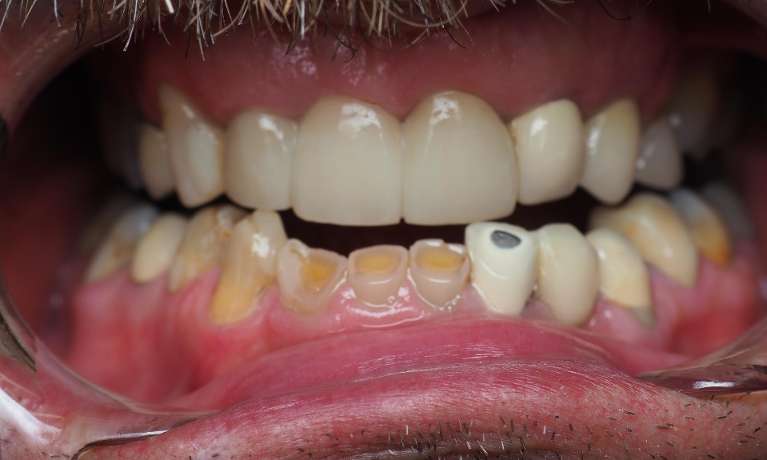
Many crowns done in the past and today have a black line where the crown meets the tooth.  The black line seen is the metal underlying the white porcelain in the restoration.  While the black line may look bad and be distracting in a smile, it is expected with porcelain fused to metal crowns or PFMs. Occasionally, the metal in the crown may be seen through the gum tissues creating a blue hue.  


Most of the crowns done at our Brookings dental office are metal free.  The materials used for crowns today such as e.max, zirconia and zirconia fused to porcelain are very strong and cosmetic.  In fact, the technology of these materials is so advanced that these crowns look better than PFMs and mimic natural teeth. Since these materials are tooth colored when manufactured, they require less of the tooth to be removed which decrease the chance of sensitivity and root canals.  


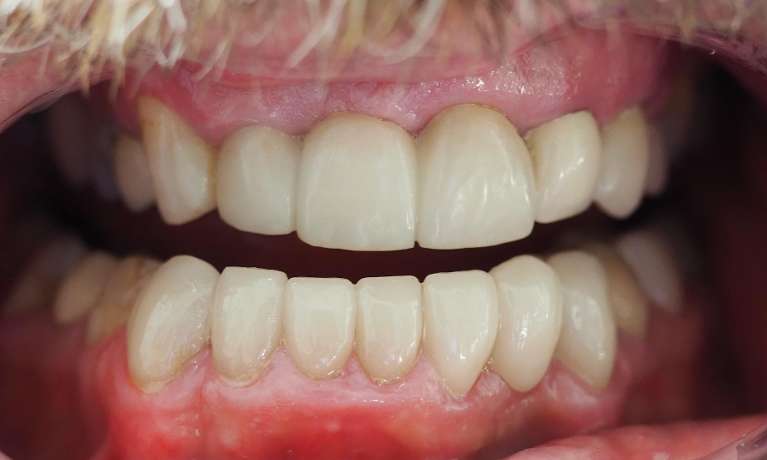
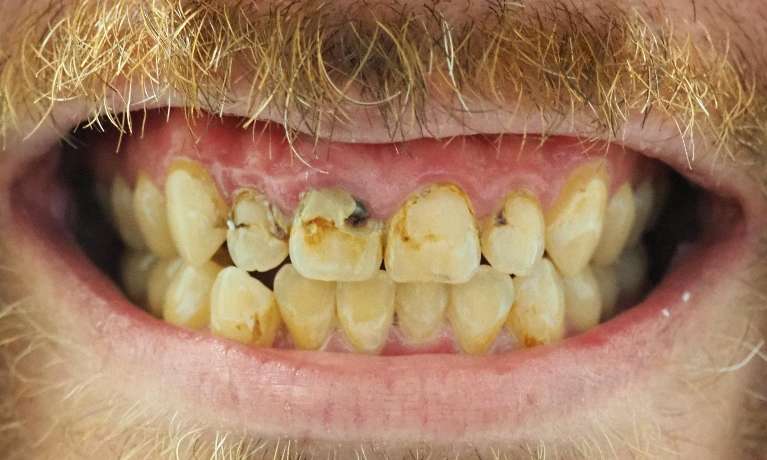
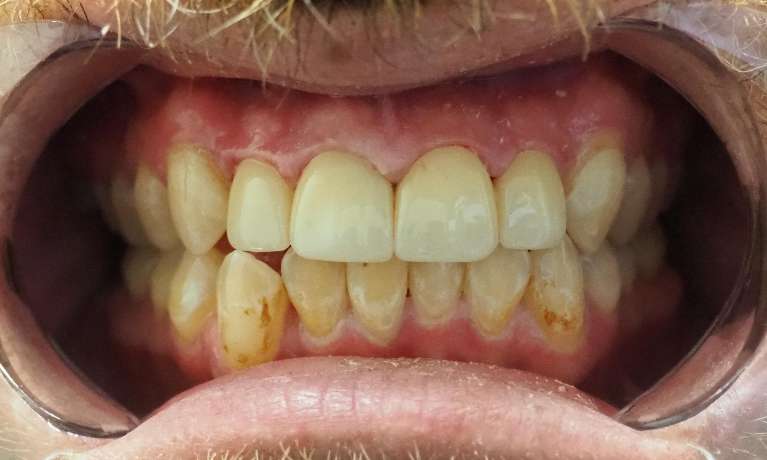
Another disadvantage of conventional porcelain fused to metal crowns is that the porcelain can break away from the metal.  When this happens, the gray and black metal will be very visible. If food traps in the broken area, it can lead to decay and gum disease.  Please see examples of the metal free crowns and veneers done by Dr. Jordan in our Smile Gallery section.  

Mini dental implants are smaller in diameter than conventional implants.  Most traditional implants are 3.5 to 6 mm in diameter where as mini implants are less than 3 mm in diameter.  These smaller dental implants are great when used to stabilize or anchor a denture.  They are often used when the jaw bone has decreased in size over time and traditional implants cannot be placed without extensive bone grafting.  Due to their smaller size, these fixtures cannot take as much force and should not be used when replacing a single tooth or anchoring a dental bridge.  When possible, Dr. Brad Jordan prefers to use traditional implants.  

Partial dentures are an option to replace one or more missing teeth.  They have been used for decades after the removal of decayed, broken and loose teeth.    Replacing these missing teeth is beneficial for chewing, stabilizing your bite and appearance.  A partial denture is still a viable option and usually very affordable way to substitute your teeth.  

Other options to replace missing teeth are bridges and dental implants.  Dental bridges require the use of two solid teeth on either side of the empty space.  Bridges require no surgery to the bone or gums and can often be made within 1 month.  At Lone Oak Dental, we use newer materials which ensure that the bridge is strong yet beautiful.  

Implants can be used to replace one, two or multiple missing teeth.  The technology with these prostheses is very advanced and rapidly evolving giving us new options all the time.  Dr. Jordan prefers to replace teeth using dental implants as it does not require removing healthy tooth structure and there is no chance for decay.  In addition, most patients tell us that implants feel more natural than partials and bridges.  

Please contact our office today in Brookings if your partial is in need of replacement or your are considering other options.   


Dental fillings are often used to replace where a cavity once was.  Fillings repair the portion of the tooth that was damaged by the decay process.  When fillings become very large, the tooth is often weakened and may break.  The most often reason for a crown being recommended in our office is when a cusp, or point breaks off of a back tooth.  In short, when a crown is recommended by Dr. Jordan, it is when he anticipates that the remaining tooth left after the decay is removed will be weakened and likely to break.  In addition, when a back tooth has had root canal treatment, a crown is recommended to prevent the tooth from breaking.  


Breaking teeth can be painful, costly and frustrating.  When a patient comes to our office with multiple broken teeth, we examine several areas: tendency to clench and grind their teeth, size of previous fillings and how stable their bite is.  People that clench and grind their teeth can generate enormous amounts of force which can chip or crack teeth.  For those that clench or grind, we would recommend a splint to be worn at night or even during the day to reduce the amount of force put on your teeth.  Unfortunately, cavities and fillings weaken teeth.  When a dentist has to fix a cavity, the resulting tooth is more prone to breaking than if it had never had a cavity or filling.  Lastly, a stable and protected bite evens the chewing forces out among teeth.  If a tooth is taking more force than designed to, it is more likely to break.  Crossbites, missing teeth, excessive overbites and underbites increase your chances of broken teeth.  We believe that prevention is the best medicine and hoped you learned something from this FAQ!

Meet Our Doctor:

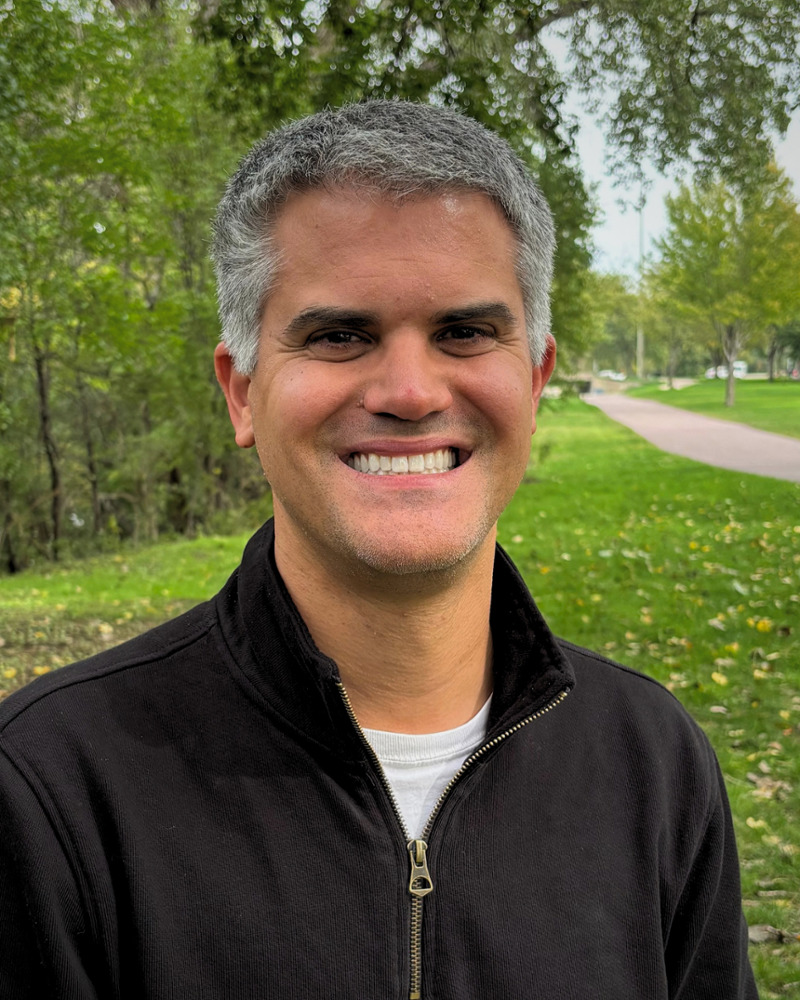
Dr. Bradley Jordan
Dentist and Owner

I grew up in Stillwater, Minnesota. My dental degree is from the University of Minnesota, where I graduated third in my class. After dental school, I had the privilege of completing an Advanced Education in General Dentistry residency in San Antonio, Texas. This intense program gave me the training needed to confidently complete difficult procedures such as implants, cosmetics, full mouth reconstructions, and sedation dentistry. One of the greatest aspects of this program was that we treated U.S. Veterans and it allowed me to give back to those ...

Crowns & Bridges Technology

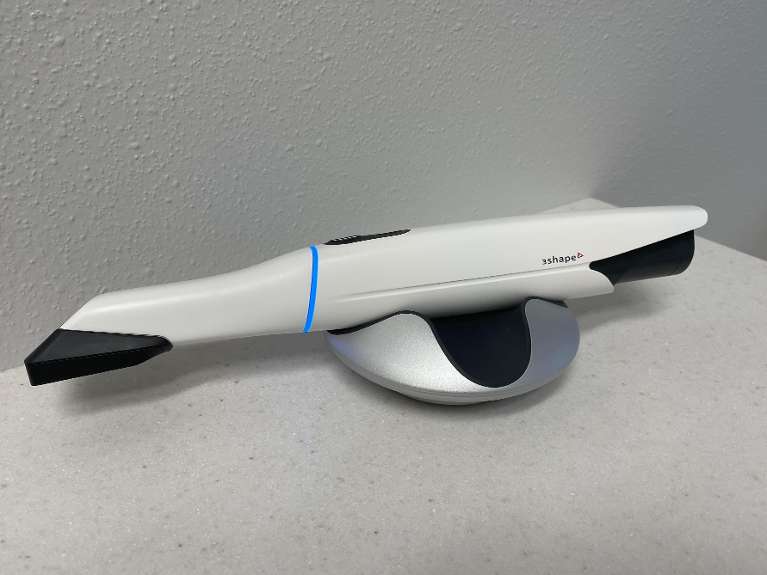
Scanner (Digital Impressions)

We utilize a Trios 5 scanner when taking impressions.  This technology lets us get rid of the goop we have to put in your mouth!  We can also get you crown or nightguard back in as little as 1 week.  

Getting an appointment is fast and easy!
Get Started!