
Skip to main content Accessible Version
Toothaches
A healthy, beautiful smile starts here

Toothaches | Dentist
Improve your smile today – call to schedule a consultation!
Claim Now!

Toothaches

As many of us know, there is nothing quite like a toothache. Nothing seems to make it better and that aching pain just won’t go away. If you are experiencing tooth pain, call Lone Oak Dental right away and we will try to see you today!

What Causes a Toothache?

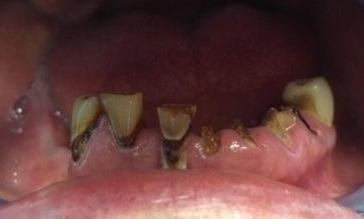
There are several reasons why you could experience a toothache. Two of the most common causes for toothaches are deep cavities and long-standing gum disease.

When a cavity (dental decay) gets close to or into the nerve of a tooth, the nerve in the tooth sends signals back to the brain that something is not right. Your brain interprets this as pain.

Another cause of toothaches is gum disease (periodontal disease). Gum disease is caused by bacteria that live on the surfaces of teeth and in the gums. When these bacteria grow and multiply, the result is loss of the hard and soft tissue that supports the teeth. After a period of time, the gum disease becomes advanced and results in an infection. Loose teeth and bad smelling breath are a sign of advanced periodontal disease.

What Can Be Done to Get Rid of the Pain?

After we meet you and review the problems you are having, we may take an x-ray to help us diagnose what tooth the pain is coming from and what is causing the pain. Looking in your mouth and at your teeth really helps us look for cavities, swelling, and broken or loose teeth. 

If the toothache is caused by a cavity and the tooth is fixable, we would recommend root canal treatment. Root canal treatment relieves the pain while allowing you to keep your tooth to smile with and chew on. Despite what people say, the root canal process should not hurt.  In our office, the cost for a root canal starts at $680.

If we find that the toothache is from a tooth that cannot be fixed or from severe gum disease, we would recommend removing the tooth. Dr. Jordan has removed thousands of teeth and will go the extra mile to make sure you are completely numb throughout the process.  The cost for a tooth removal starts at $185.

At the end of your visit with us, we may recommend prescription medications such as antibiotics or pain medication.

How Can I Avoid a Toothache?

Routine oral hygiene such as brushing and flossing helps remove many of the bacteria that live in your mouth. In addition, scheduling dental cleanings and exams with your dentist on a routine basis will help prevent small dental problems from progressing quickly into sore, infected, and broken teeth. 

Please Contact Us to Arrange an Appointment

If you are losing sleep, not eating well, or just can’t take the pain any longer, we are confident that there is relief in sight. Although a toothache may seem like a big problem to fix, the procedures are often painless, and we will bend over backwards to make your visit as comfortable as possible. Let the team at Lone Oak Dental help you eliminate that toothache and get back to a healthy, pain-free mouth. 

Thank you for removing wisdom teeth

Thank you for removing wisdom teeth

Dear Dr. Jordan, Thank you for your expertise in removing wisdom teeth. The "care sheet" was especially useful and your follow up call later that night was appreciated. Thank you for your genuine care and concern for your patients.

Frequently Asked Questions

Breaking teeth can be painful, costly and frustrating.  When a patient comes to our office with multiple broken teeth, we examine several areas: tendency to clench and grind their teeth, size of previous fillings and how stable their bite is.  People that clench and grind their teeth can generate enormous amounts of force which can chip or crack teeth.  For those that clench or grind, we would recommend a splint to be worn at night or even during the day to reduce the amount of force put on your teeth.  Unfortunately, cavities and fillings weaken teeth.  When a dentist has to fix a cavity, the resulting tooth is more prone to breaking than if it had never had a cavity or filling.  Lastly, a stable and protected bite evens the chewing forces out among teeth.  If a tooth is taking more force than designed to, it is more likely to break.  Crossbites, missing teeth, excessive overbites and underbites increase your chances of broken teeth.  We believe that prevention is the best medicine and hoped you learned something from this FAQ!

When the nerve in a tooth dies, there are two treatment options, (1) a root canal to save the tooth or (2) remove the tooth.  Root canal treatment allows us to save teeth!


Most teeth that have had root canals have had a deep cavity, large filling or a crack.  Big fillings and cracks in teeth weaken the tooth and increase the chance of the tooth breaking.  Dental crowns hold a weakened tooth together preventing both the filling and tooth from breaking.


A research article from 2016 in the American Association of Endodontists found that teeth that did not get a crown within 4 months after the root canal was done were 3 times more likely to be extracted than those that got a crown within 4 months.  


We believe that if you are going to invest the time, effort and money into root canal treatment, you also need to plan on getting a crown shortly after the root canal is done.  


Gum disease which is also referred to as periodontal disease is found in about half of American adults.  Common symptoms and signs of gum disease are bleeding after brushing and flossing, swollen gums, teeth that move slightly when touched and bad breath.  When gum disease is left untreated, the teeth are mobile, painful to chew with and look longer.


At the forefront of gum disease prevention is good oral hygiene.  Thorough brushing and flossing removes the bacteria that can lead to gum disease.  Smoking has also been shown to increase the risk of periodontal disease. Routine dental cleanings by a dental hygienist removes tartar and plaque in difficult to reach areas.  Tartar is the yellow, rock-like substance found near the gum line.


Once a patient has gum disease, one of the first treatment recommendations is scaling and root planing.  In our office, we often refer to this as gum disease therapy. This treatment is a very thorough dental cleaning that removes the tartar and plaque above and below the gum line.  


Since gum disease is a lifelong disease like heart disease, frequent monitoring is crucial.  Persons with heart disease or high blood pressure often see their physician every 3-6 months to ensure that the disease is controlled and not progressing. Similarly, most patients with gum disease require appointments every 3-4 months to remove the tartar and plaque that has formed.  


We have very gentle and thorough dental hygienists at Lone Oak Dental and know that their expertise has helped countless patients!


Teeth have living tissue.  What? Yes, there are living nerves, blood vessels and cells inside a tooth.  When these tissues are injured from a deep cavity or trauma, they can begin to die.  Many times, this leads to pain in the tooth with hot, cold, biting or pressure.


Fortunately, that pain can often be eliminated with root canal treatment.  The goals of root canal treatment are to 1) remove the dying or dead nerve tissue 2) to disinfect the space where the nerve tissue was and 3) prevent bacterial growth inside the tooth.  When all of these are achieved, root canal therapy is highly successful.


After the tooth is thoroughly numbed, the nerve of the tooth is accessed and cleaned out.  Once all the roots of the tooth are located and cleaned out, the internal surfaces of the tooth are disinfected to remove any bacteria that may still remain.  The inside of the tooth is filled with a rubbery material called gutta percha that prevents bacteria from growing. The tooth is then sealed on the top with a permanent filling or crown.  


Saving your tooth is important in many cases as adjacent teeth can shift and your bite collapse when a tooth is pulled.  People that are missing teeth often complain of a restricted diet, decreased self esteem and are prone to breaking other teeth.  Dr. Jordan believes that when a tooth is sound and there is enough tooth remaining, that root canal treatment is a great option.


As you can imagine, teeth take a lot of force.  That is due to our jaw muscles being some of the strongest muscles in the body.  As we age, it is not uncommon to develop small cracks in the grooves of our back teeth from a normal diet.  Sometimes these cracks get deeper and the strength of the tooth diminishes.  When this happens, a portion of a tooth may break off or the tooth becomes sore to bite on.  


Cracked teeth should be examined early and treated quickly before more damage occurs.  Left untreated, the crack can enter the nerve space of the tooth and cause terrible pain.  Occasionally, the crack goes below the gum line and breaks the root which requires that the entire tooth be removed.  


Preventing cracked teeth can be done by avoiding foods that require a lot of force such as almonds, pistachios, sunflower seeds and ice chewing.  People that grind their teeth at night or during the day should wear a bite guard to prevent breaking and weakening teeth.  


As previously mentioned, cracked teeth should be brought to the attention of the dentist ASAP.  If you have a tooth that is tender to bite on occasionally, let Dr. Jordan know soon!


Meet Our Doctor:

Dr. Bradley Jordan
Dentist and Owner

I grew up in Stillwater, Minnesota. My dental degree is from the University of Minnesota, where I graduated third in my class. After dental school, I had the privilege of completing an Advanced Education in General Dentistry residency in San Antonio, Texas. This intense program gave me the training needed to confidently complete difficult procedures such as implants, cosmetics, full mouth reconstructions, and sedation dentistry. One of the greatest aspects of this program was that we treated U.S. Veterans and it allowed me to give back to those ...

Getting an appointment is fast and easy!
Get Started!